

Published September 28, 2026 · updated November 16, 2026 · Lenka Bolcárová
In short
A clinic gets more patients when people can find it at the moment they search for a specific treatment, and when its profile, reviews and website give them a reason to call. In practice that means four steps, in this order: a complete Google profile* with fresh reviews, a website with clear services and booking, ads for specific treatments, and content that builds trust.
Awareness is the key to success in healthcare. For your clinic to succeed, patients have to know you exist before they can walk through your door. But how do you get there? The answer is simple: digital marketing. Patients often search for healthcare services online, compare ratings and read reviews. That is why practices need a strong online presence and have to communicate their credibility and quality of care clearly.
In this article
In this article
One of the main ways to attract more patients to your practice is to focus on Google reviews. Reviews are often the first impression potential patients get of your practice. It is important not only to collect positive reviews but also to respond actively to feedback. That builds trust and transparency.
Trust is the cornerstone of healthcare services, so your marketing has to communicate it clearly and responsibly. Building a trustworthy image online can be the deciding factor when patients choose a clinic, and social media can help. Focusing on quality content that reflects the values and expertise of your practice can significantly increase your patient numbers and improve your online reputation.
Effective marketing for clinics is not only about attracting new patients. It is also about keeping existing relationships and building long-term trust. How can your practice stand out in the digital world? What steps will you take to strengthen your online presence?
What the numbers say
Patients choose a clinic based on reviews, and they search for it online
of patients won't book a doctor rated below 4.0rater8 2026, USA
of patients have canceled an appointment or left a doctor because of reviewsrater8 2026, USA
of patients also look for a doctor through AI tools, up from 31% a year earlierrater8 2026, USA
of people only consider reviews from the last three monthsBrightLocal 2026, USA
of people in the EU have already booked a doctor's appointment through a websiteEurostat 2024
The rater8 (992 people) and BrightLocal (1,002 people) surveys were conducted in the US by companies that build review tools. The Eurostat figure covers people aged 16 to 74.
Marketing strategy for a clinic or practice
A good marketing strategy, that includes digital marketing, is genuinely important for every clinic or practice, because people now look for healthcare services online. The strategy should include elements such as SEO, PPC* campaigns, online booking systems and brand building. Each of these plays a key role in how effectively a practice can attract and retain patients.
Social media is one of the most important channels for clinic marketing. These platforms let clinics communicate directly with patients, share useful information and build a community. Email marketing is another effective tool that helps you stay in touch with patients and increase their loyalty. To get good results from email marketing, you first need to build a quality list systematically.
Website optimization is another key part of successful digital marketing. A well-optimized site not only improves the clinic’s visibility in search engines but also gives patients easy access to information and services. Patient satisfaction surveys matter too, because they give you valuable feedback that can help you improve your services and earn positive reviews.
The patient journey
- 01SearchesGoogle, maps, AI assistant
- 02ComparesGoogle profile and reviews
- 03Verifieswebsite, doctors, prices, social media
- 04Booksphone or online booking
- 05Returnsemail, reminder, referral
A different channel decides at every step. When one is missing, the patient goes to a competitor.
Why a Google profile matters for your clinic
A Google profile is now an essential tool for the online presence of any clinic. It helps your clinic and practice show up in search and improves your local SEO*. Optimizing your Google profile is key because it increases visibility and lets potential patients easily find the information they need.
Reviews on your Google profile play a significant role in building credibility for both large and small clinics. Positive reviews can strongly influence how patients choose a healthcare provider. That is why it is important not only to collect reviews but also to respond to them actively, which strengthens trust.
Google decides local rankings based on three things
- Relevance: how well the profile matches what the person is searching for
- Distance: how far the clinic is from them
- Prominence: how well known the clinic is, including the number of reviews and the rating
You can't pay Google for a better local ranking.
What a clinic's Google profile should include
- a verified profile and the right primary category, for example Dermatologist or Dental clinic
- address, phone number and opening hours, including holidays and vacation closures
- a list of services, named the way patients search for them
- photos of the waiting room, the exam rooms and the doctors, so patients know where they are going
- a link to your website or directly to online booking
- a reply to every review, ideally within a week
In healthcare, review replies come with one extra rule
Don't write anything about a person's health condition or the treatment they had. Even confirming that someone is your patient can disclose health information. In response to a complaint, thank them, apologize for their experience and offer a phone number where you can resolve it in person.
Using PPC campaigns and Google Ads in digital marketing
It doesn’t matter whether you run an aesthetic clinic, a skin clinic, a dental practice or a physiotherapy practice. The principle in this segment is always the same. PPC campaigns and Google Ads are among the most effective strategies for quickly winning new patients for clinics and practices. Paid ads let practices target specific locations and demographic groups, which raises the chances of reaching relevant patients.
Google Ads uses local targeting, which means ads are shown to potential patients near the practice. This targeting makes campaigns more effective and helps practices get better results. Conversion tracking* is key to evaluating how well these ads work, because it shows how many patients actually chose the practice’s services as a result of an ad.
Advertising in healthcare has its limits
Google treats health as a sensitive category*, so for these ads it doesn't allow targeting based on your own patient lists or on people who have already visited your website (remarketing*). Since January 2025, Meta has also limited the booking and purchase data healthcare advertisers can use to train ad delivery.
That is why your own measurement matters for clinics: calls from ads, submitted forms and online bookings. At the front desk, you can simply ask patients how they heard about you.
From our work
Aesthetic and laser center
three locations, certified dermatologists, patients book mainly by phone
- Situation
Before working with us, the clinic ran no paid advertising and didn't track where patients came from.
- Problem
Without tracking, there was no way to say whether a patient came from Google, the website, social media or a referral. Clicks and ad reach don't tell you that.
- Solution
We set up tracking for every click on the phone number, every submitted form and every click on online booking. We launched ads on Facebook and Instagram and Google Ads split by treatment, each with its own keywords and a phone number in the ad.
- Result
Every month the clinic can see how many people asked about an appointment and which channel they came from. We shift the ad budget toward the treatments the clinic wants to fill, and we adjust the website and Google profile based on where patients get in touch most often.
Optimizing for local search
Local search optimization focuses on increasing visibility in the results for a specific segment in a given area, which is essential for attracting patients from nearby. Local SEO covers several aspects, including technical SEO* and quality content, both of which are necessary to succeed in this area.
One of the main goals of local SEO is to make sure your clinic or practice shows up near the top of search results when potential patients look for healthcare services nearby. That includes optimizing your website, which is key to improving your local SEO and visibility. Quality content that is relevant to the local audience can significantly improve your SEO and visibility.
AI optimization can also help improve your SEO and visibility in the digital space. Artificial intelligence can help with analyzing data and identifying trends, which allows more effective targeting and adapting content to the needs of the local market. How can your clinic use these techniques to improve its online presence and attract more patients? The answer is quality optimization.
Patients also ask AI assistants
More and more people ask ChatGPT or Google's AI mode about doctors and treatments. AI assistants answer from what they find on websites and in profiles, and preparing your website for them is called GEO* or AI optimization. It helps a clinic to have clear answers on its website to patients' questions: what the treatment is for, who it suits, how long it takes and how much it costs.
Local SEO
For clinics and practices, local SEO is a key tool for improving visibility in search results. It focuses on optimizing your website and other online elements so that your clinic is easy for potential patients in your area to find. Website optimization is a basic step that helps improve local SEO and with it the visibility of your practice.
- Google Business Profile optimization: increases the clinic’s visibility and lets potential patients easily find the information they need.
- Quality content, added regularly: contributes significantly to better SEO.
- Content marketing: helps improve SEO and the visibility of clinics by providing valuable, relevant content for the local audience.
- The same name, address and phone number everywhere: on your website, in your Google profile and in directories. Inconsistencies confuse Google.
- A separate page for every treatment: patients search for “mole removal in [city]”, not “clinic services”.
Building the brand of your clinic or practice
Building the brand of clinics and practices is a cornerstone of successful marketing. A strong brand identity helps increase patient trust, supports brand recognition and lets a clinic stand out from the competition. That is why it is important to define brand elements such as visual identity, colors, typography and tone of voice, and then use them consistently across all communication channels. A consistent identity helps patients recognize the brand more easily and form specific associations with it.
Social media plays a key role in building and spreading a brand identity. It lets clinics present their brand, communicate their values and share successes and patient experiences. Regular, consistent communication on social media can raise brand awareness and strengthen your position in a competitive environment.
What works in practice
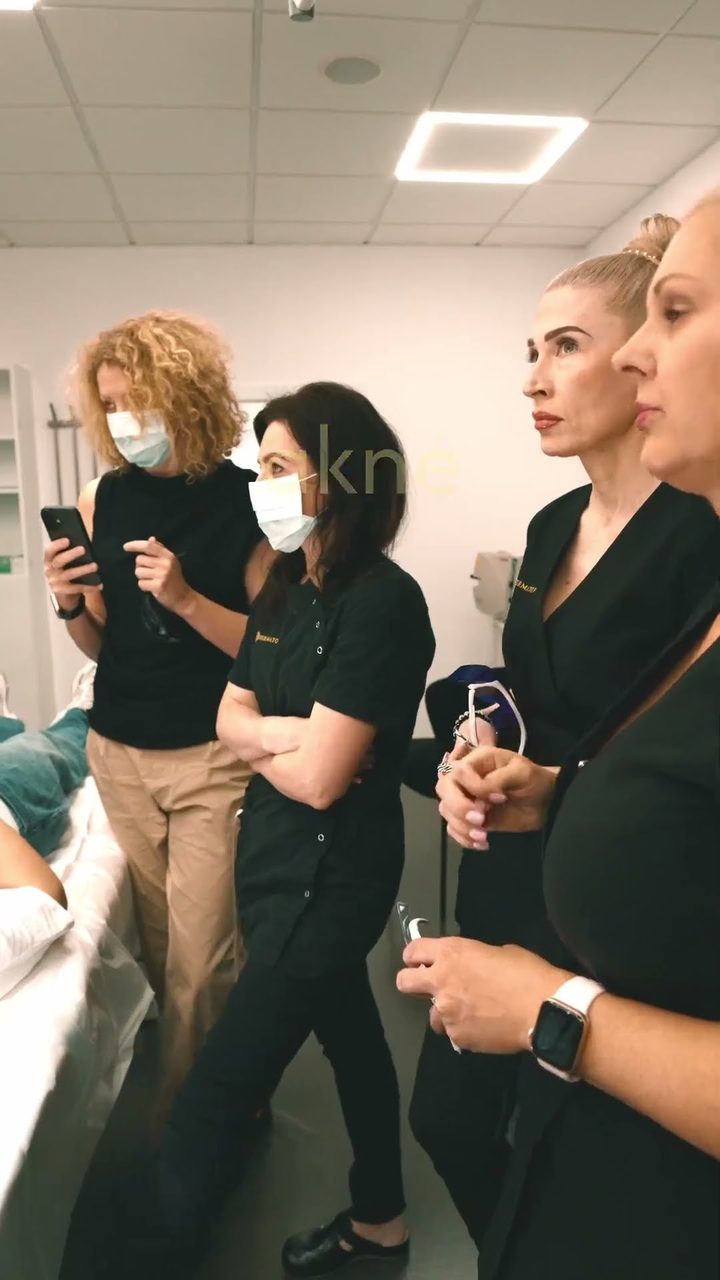
Examples of videos we shot for an aesthetic clinic:
 Video
 Video
 Video
 Video
That way, patients see the people they are going to before their first visit.
We can prepare videos and photos from your clinic for you. Take a look at our video production.
Why website optimization matters
A clinic’s website is one of the key touchpoints between a healthcare provider and a patient. Its job is not only to present services but, above all, to let the patient quickly find relevant information, understand what you offer and take the next step easily, for example booking an exam or contacting the practice. The quality of the user experience (UX) is directly tied to how well the website does its job.
Website optimization covers technical, content and usability aspects. Important factors include loading speed, a responsive display on mobile devices, clear navigation, security and the availability of relevant content. These elements affect not only the user experience but also how visible the site is in search engines. For clinics, it is important that the website clearly states the services provided, the doctors, the location, how to book and how to get in touch.
What a patient must find on a clinic's website without searching
- Services and treatmentsEach with its own page, which an ad can also use as a landing page*, with a description, what to expect, and before-and-after photos so patients see real results. Publish photos only with the patient's written consent.
- Prices or a price listPatients compare, and without a price they often leave.
- Doctors and their expertiseA name, qualifications and a photo build trust.
- Phone and bookingOne tap on mobile, in the header and on every service page.
- Address and parkingWith a map and directions on how to get to the clinic.
- Opening hoursThe same as in your Google profile.
- ReviewsReal patient ratings, for example from Google.
If your website doesn't have these things or is hard to use on mobile, see how we approach web design and development.
Part of optimization can also be an online booking system*, which shortens the path from getting information to actually booking. A well-designed website can help a clinic increase its visibility in search, make information easier for patients to access and support the acquisition of new patients.
Successful marketing for a clinic or practice doesn’t rest on a single communication channel. What matters is building a connected system in which brand identity, a quality website, SEO, social media, online advertising and relevant content support each other. Each of these has its role. Step by step, you move from building trust and brand recognition to winning new patients and making it easy for them to book.
For healthcare providers, it is therefore important to see digital marketing as a long-term process. A one-off campaign doesn’t fit that. Regular evaluation of results, optimization of individual channels and adapting your communication to patients‘ needs let a clinic use its marketing budget more efficiently while building a stable position online.
The combination of expert communication, a trustworthy brand and a well-set-up digital strategy can help a clinic be more visible at the moment a patient searches for a specific healthcare service, and create a better experience across the whole journey from the first search to booking.
Key takeaways
- Patients decide based on your Google profile and reviews before they ever open your website.
- Reviews need to keep coming in regularly, and each one needs a reply that contains no health information.
- On mobile, your website has to show services, prices, doctors and a phone number without making people search.
- Advertising in healthcare has limited targeting, so ads for specific treatments are worth it.
- Measure success by calls and bookings, not by clicks and reach.
FAQ
How can I get more patients to my practice without a big budget?
Start with what is free: a complete, verified Google profile, replies to all reviews and a polite request to satisfied patients to leave a rating. Then a website where patients can quickly find services, prices and a phone number. Add paid ads only once your profile and website contain everything a patient needs and are ready for ads. Want to know if yours are? Get in touch.
Can a clinic reply to a negative review?
Yes, and it should. Reply factually and politely, without any health information and without confirming what treatment the person had. Offer a phone number or email where you can resolve the situation in person. A calm response convinces other readers too.
What is better for a clinic: Google Ads or social media?
They do different jobs. Google Ads catches a person who is searching for a specific treatment right now. Social media builds trust and keeps the clinic top of mind for people who are still deciding. Most clinics need both, with a budget that reflects which treatments they want to fill.
How many reviews does a clinic need?
Enough not to trail the competition in your area. Look at the clinics that appear first in Google Maps for your specialty and city, and compare their number of reviews and ratings with yours. A steady flow of new reviews matters too: 74% of people only consider reviews from the last three months (BrightLocal 2026).
Can a clinic do remarketing?
Only to a limited extent. Google treats health as a sensitive category and doesn't allow targeting based on your own lists or website visitors for these ads. Since 2025, Meta has limited the booking data healthcare advertisers can use. That is why ads for specific treatments people are searching for right now are the better investment.
How do I know whether my marketing brings in new patients?
Measure calls, submitted forms and online bookings, and attribute them to channels. Clicks and reach aren't enough. A simple question at the front desk about how the patient heard about you helps too. Want to know where your patients come from? We'll set up tracking for calls, forms and bookings.
Glossary
Terms marked with an asterisk (*) in the text are explained here.
- Google Business Profile
- A clinic's free listing in Google Search and Maps (Google Business Profile), with its address, hours, photos and reviews.
- Local SEO
- Changes to your website and profiles that make a clinic show up for people nearby when they search for its services.
- SEO
- Search engine optimization: the content and technical setup of a website that make Google show it higher without paying per click.
- PPC advertising
- Paid advertising where you pay per click, for example in Google Ads. It appears to people who search for specific terms.
- Conversion
- The step you want a patient to take: call, submit a form or book online.
- Conversion tracking
- A setup that records a phone call, form or booking and attributes it to a campaign or channel.
- Remarketing
- Ads for people who have already visited your website. In healthcare, both Google and Meta restrict it.
- Sensitive category
- A topic such as health, where ad platforms restrict targeting and the use of data about people.
- Landing page
- The page an ad leads to. For a clinic, it should be about one treatment and show the phone number prominently.
- Online booking system
- A tool where patients choose their own appointment time. It shortens the path from interest to booking.
- GEO (AI optimization)
- Preparing your website and profiles for AI search tools such as ChatGPT or Google's AI mode, so the clinic appears in their answers.
Want to know where your clinic is losing patients?
We'll look at your Google profile, website and ads and suggest where to start.
Sources
- Eurostat: Individuals – internet activities, booking a doctor's appointment through a website (2024)
- rater8: 2026 Patient Choice Report (USA)
- BrightLocal: Local Consumer Review Survey 2026
- Google: How to improve your business's local ranking
- Google Ads: Restricted targeting in personalized advertising
- Google Ads: Healthcare and medicines
- Click Consult: Meta advertising restrictions for health and wellness (2025)